
I Found Bugs in My Own Demo. I Posted It Anyway.
The ask was a five-second video. What came back was nothing.
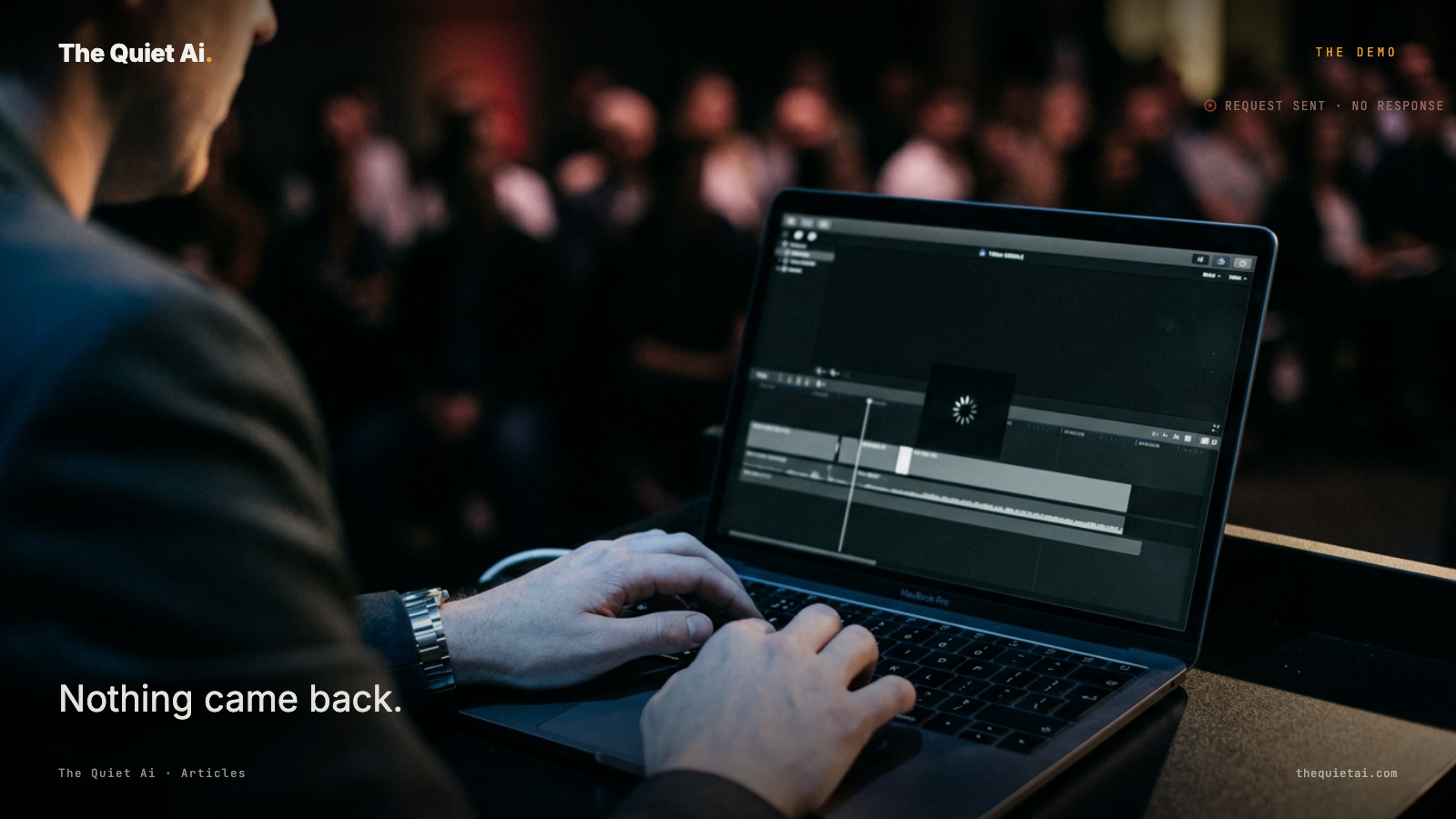
I asked my own tool for a five-second video.
It was a live demo. People were watching.
Nothing came back.
Not a slow render I could talk over. Not a rough cut I could wave off with “we’ll clean that up in post.” Nothing. I asked, and the request went in, and what should have come out didn’t. I sat there in front of an audience, waiting on output that was never going to arrive, because the tool that makes the video had taken the request and lost it.
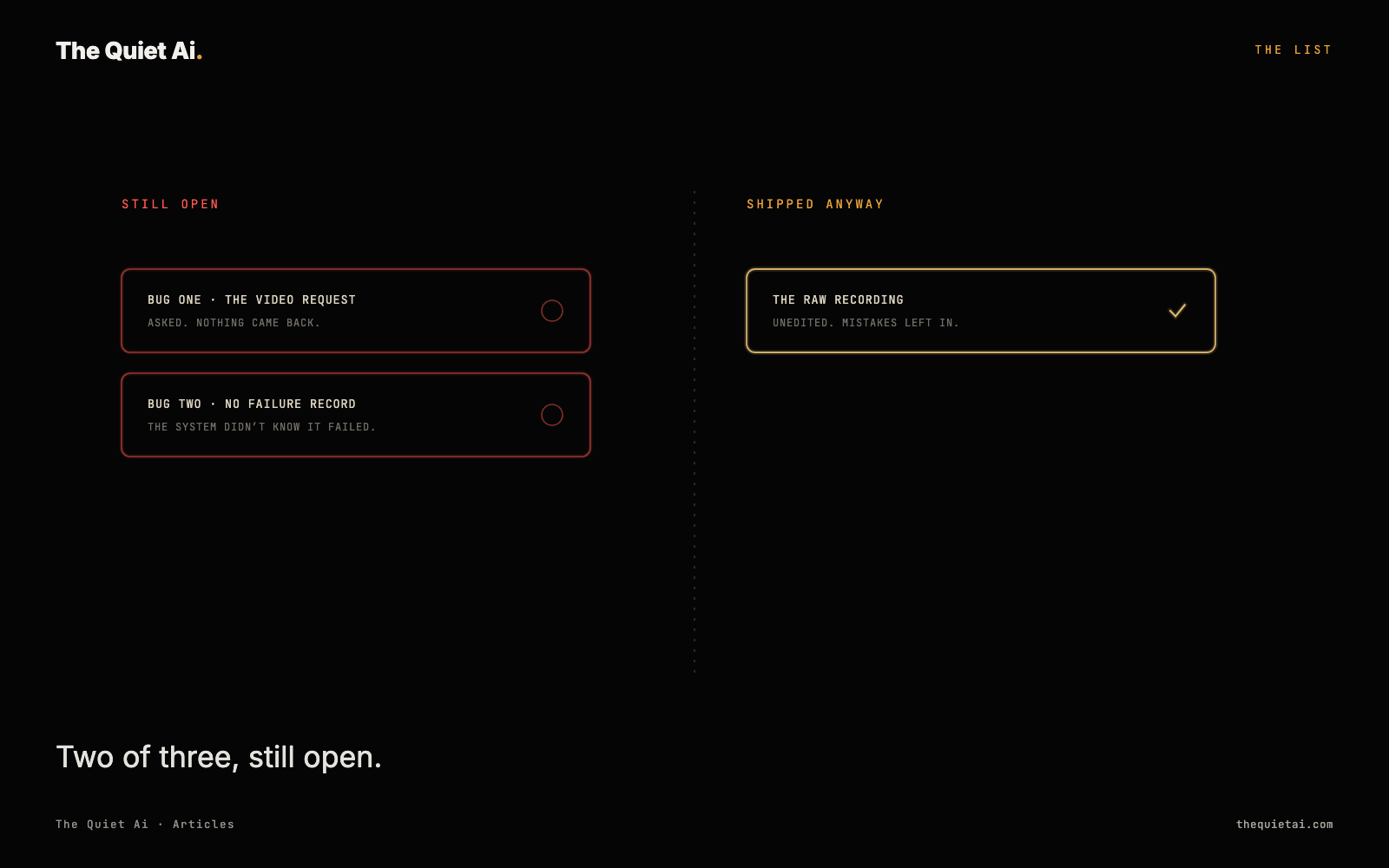
That’s bug one. It’s still open. If you leave the video worker mid-task and come back to it, it forgets what you asked for. I didn’t find that in testing, in private, where I could quietly file a ticket and move on. I found it live, on camera, in front of people, which is a much worse way to learn something and also the only honest way I actually learned it.
The second one was quieter, and it mattered more
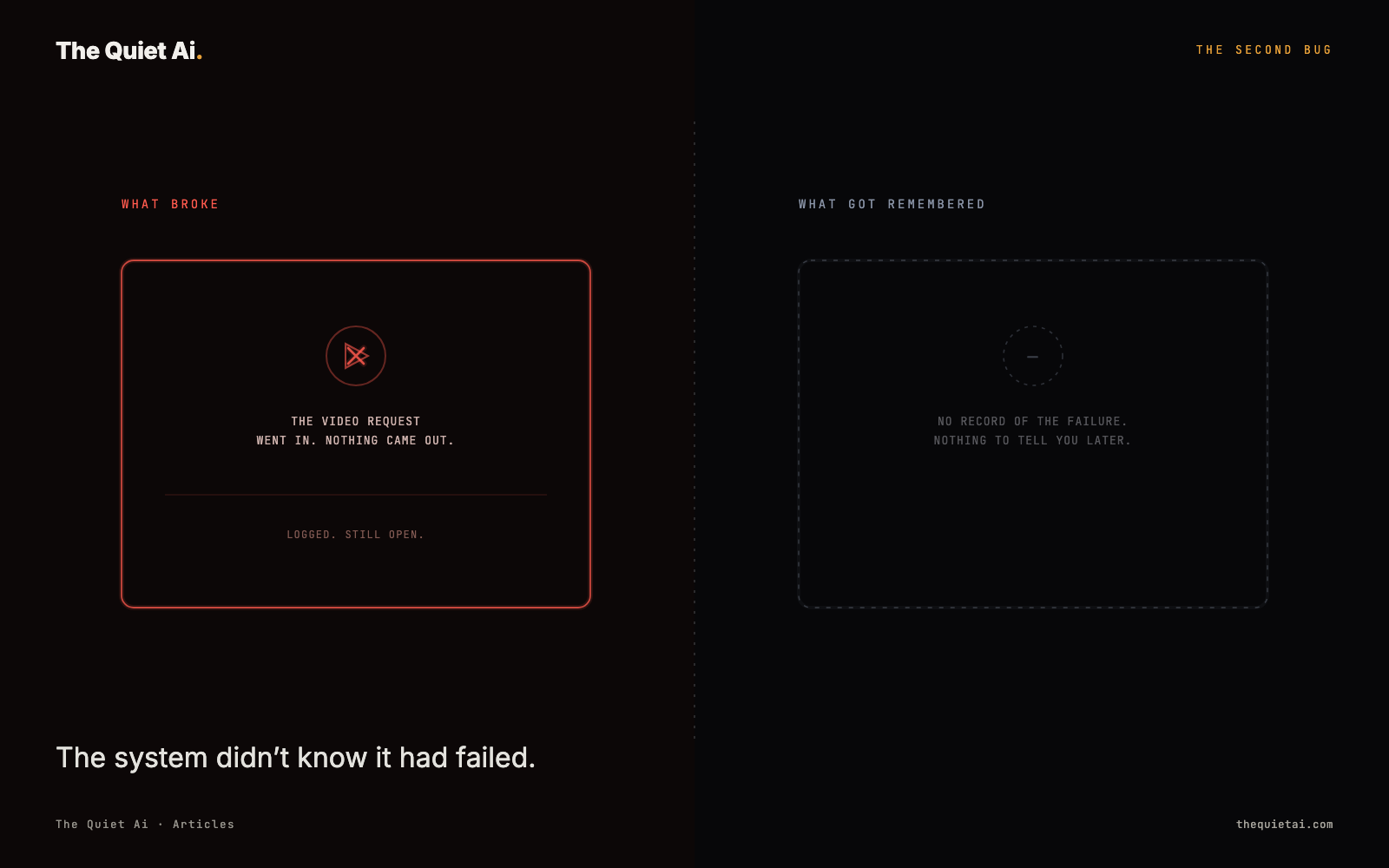
Underneath the failed video request sat a second problem I almost didn’t clock in the moment.
The system hadn’t kept a record of what had just gone wrong.
That sounds small next to “the video never showed up.” It isn’t. A tool that fails and knows it failed is a tool you can trust to tell you the truth about itself later. A tool that fails and has no memory of failing is a different, harder problem — because next time, it won’t even be able to tell me something broke. I’ll just be back where I started: staring at a blank result, guessing.
That’s bug two. Also still open. It’s the one I actually think about more, because it isn’t a glitch — it’s a gap in what the system knows about itself, and gaps like that don’t announce themselves. You only find them by hitting them.
The third one fixed itself while I was still talking
There was a third snag. Somewhere upstream, the step that hands a finished piece of research off to the part of the system that turns it into content was running slower than I’d told the room to expect.
I said it would arrive. It hadn’t, yet. I kept talking. It was slower than I’d promised, and you could probably hear that in my voice if you watched the footage back — the small hesitation of someone who has said a thing will happen and is no longer fully sure.
Then it arrived. While the camera was still running.
That’s the one bug out of three that resolved itself in the room, in real time, without me touching anything. Not fixed by me — fixed by simply taking longer than I said it would, and then doing the job anyway. I don’t love that as an outcome. I do think it’s worth showing, because “eventually correct, slower than promised” is a real category of thing that happens, and pretending it doesn’t is exactly the kind of small dishonesty that adds up into a demo reel nobody should trust.
The choice that actually mattered
None of this is what makes the story. Software breaks. Anyone who’s built anything knows that. The part worth talking about is what happened next, because I had an easy option in front of me and I didn’t take it.
I could have cut all three of these out. A few minutes with an editor and the recording becomes a clean, confident walkthrough — a request goes in, a video comes out, nobody watches me wait on a result that never shows up. That version exists in my head as clearly as the real one does. It would have looked better.
And it would have been worth less.
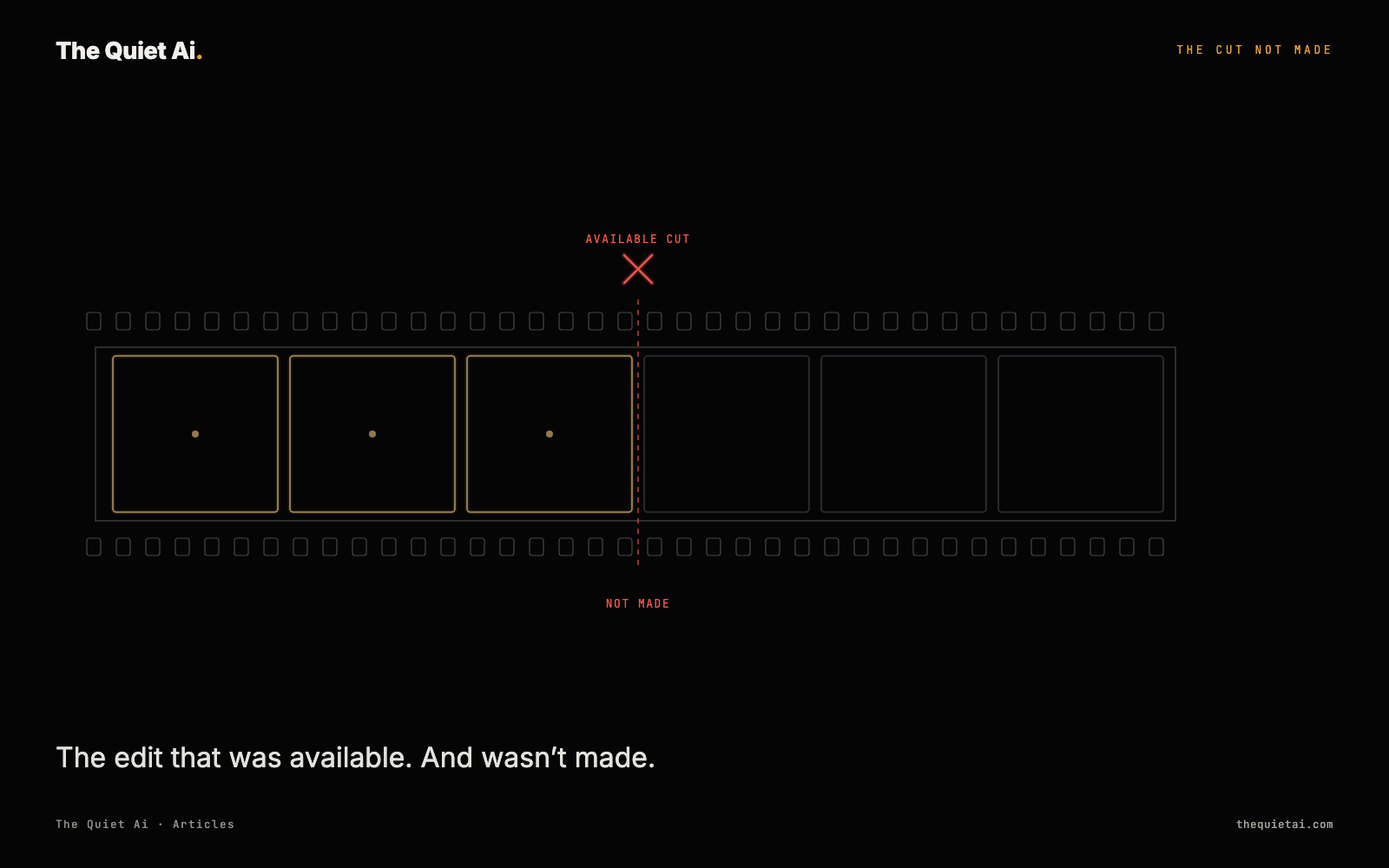
Anyone can show you a tool working. That’s the easiest video in the world to make — line up the good take, throw away the rest, call it a demo. What you can’t fake, and what’s actually worth watching, is what someone does with the recording when the thing they built doesn’t do what they said it would in front of everyone.
I decided to post it anyway. Not edited around. Not narrated after the fact with a reassuring voiceover explaining it away. The failed request, the missing record, the late handoff — all of it, in the order it actually happened, because that order is the truth of what it’s like to build this in public rather than behind a curtain and only open the curtain once everything already works.
Still open. Still shipping.
Two of these three bugs are still open as I write this. I’m not going to pretend they’re fixed because pretending would make for a tidier ending. They’re logged. They’re real. They’ll get worked on the same way everything else here does — in the open, on the record, in front of whoever’s watching.
What I keep coming back to is this: a polished demo tells you a tool can work under ideal conditions, once, with the failures trimmed out before you ever saw them. A demo with the mistakes still in it tells you something different and more useful — what actually happens when the ideal conditions don’t hold. That’s the only kind of proof I’m interested in building a reputation on.
The ask was a five-second video. What came back was nothing.
I filmed that. And I posted it anyway.

More of this, unedited, at thequietai.com.