Your Second Brain Shouldn’t Be a Library. It Should Be a Workplace.
Storing what you save is half of what a folder can do; the other half is letting something besides you work in it.
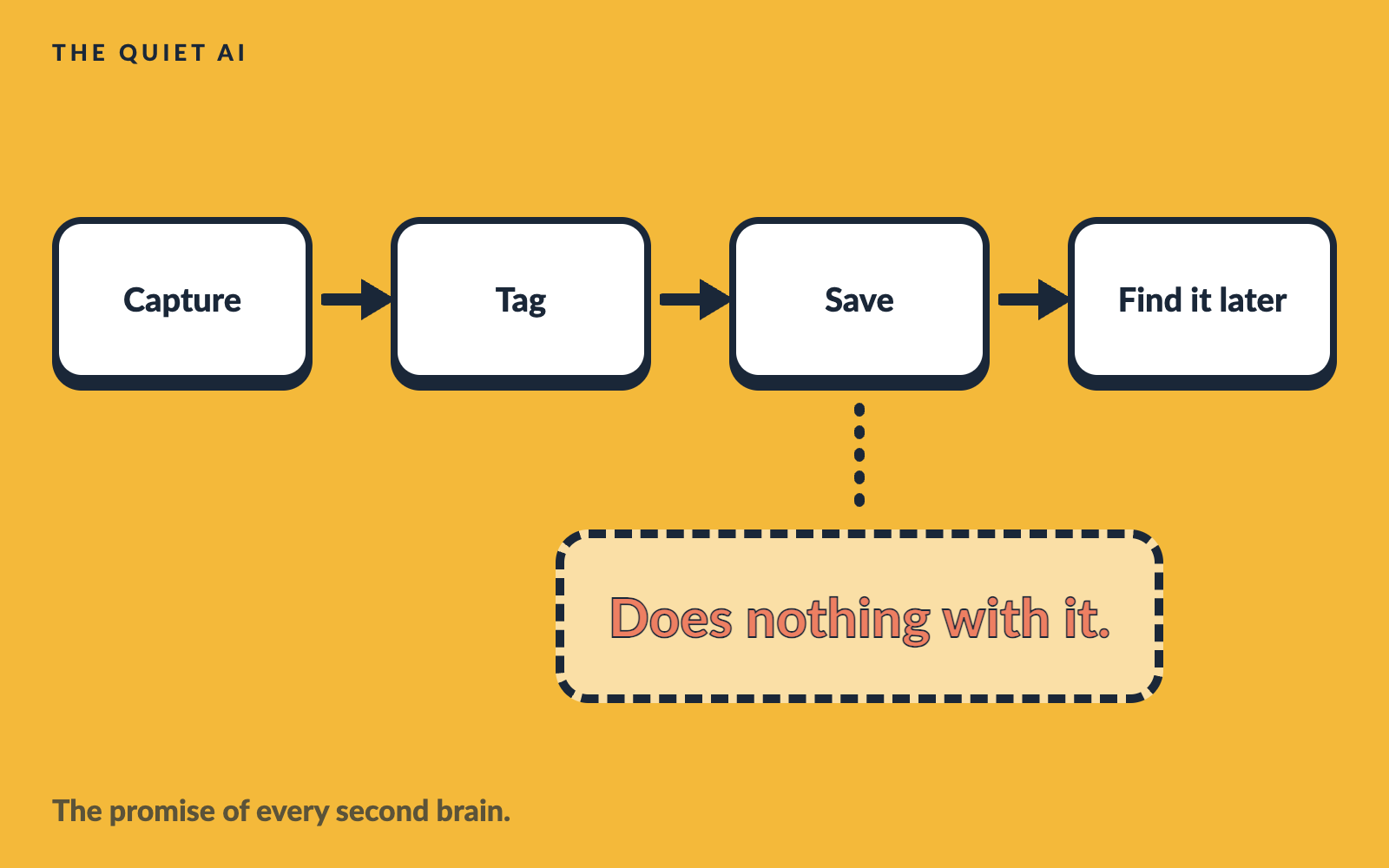
Capture it, tag it, save it, find it later. That’s the promise of every second brain I’ve been sold, and I believed it more than once.
It has always left something out: nothing in that system does anything with what you gave it. The notes sit where you put them until you come back and read them yourself. It’s a library, and a library needs you at the desk.
A folder can now do more than hold things. One person’s setup shows how.
What Klaassen’s folders do
Kieran Klaassen runs his personal system out of folders, and Every’s “Show Us Your Folders” describes it. Tuin, Dutch for garden, holds “his goals, tasks, meeting notes, ideas, projects, and personal records in folders.” Erf, “yard,” is “the coordinator. It starts agent sessions and sends each task to the folder that contains the relevant files and instructions.”
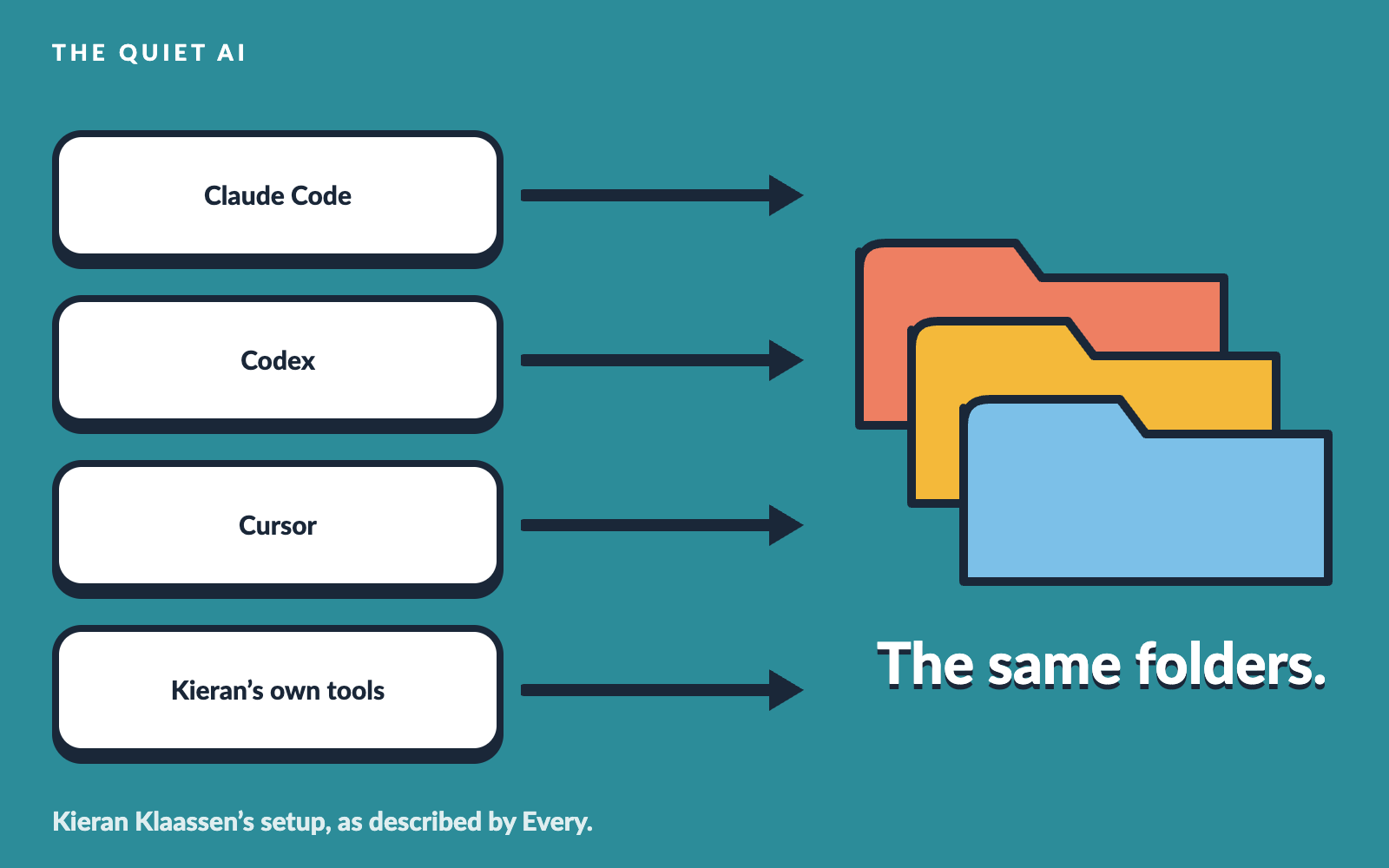
Then comes the detail I keep going back to: “Claude Code, Codex, Cursor, and Kieran’s own tools all use those same folders, so Kieran can switch tools without moving his context.”
That’s a workplace. Different tools walk into the same room, each finds what it needs where it was left, and nobody re-explains the job.
His other piece, “The Folder Is the Agent,” comes at the same idea from the other side. His ~/cora/ folder builds features. His ~/cora-agent/ “runs the operation. It has no app code, so it can’t accidentally modify production code while doing operations work.” Same model in both. The folder decides what kind of work happens there.
The half a second brain skips
Storing is half of what a folder does. The other half is that something other than you can walk in and act on what’s there.
Put research in a folder and a researcher works in it. Later a writer opens the same folder, reads what the researcher found, and drafts from it without a fresh briefing. Later still something designs from the draft. The folder never moved, and each pass started where the last one stopped.
I’ve watched one folder carry a piece of work from research to a chapter, then a cover, a short video, a reel, a carousel, and an article. Each stop began from what the last one left in the folder. The folder held the context, and each kind of work read it and added to it.
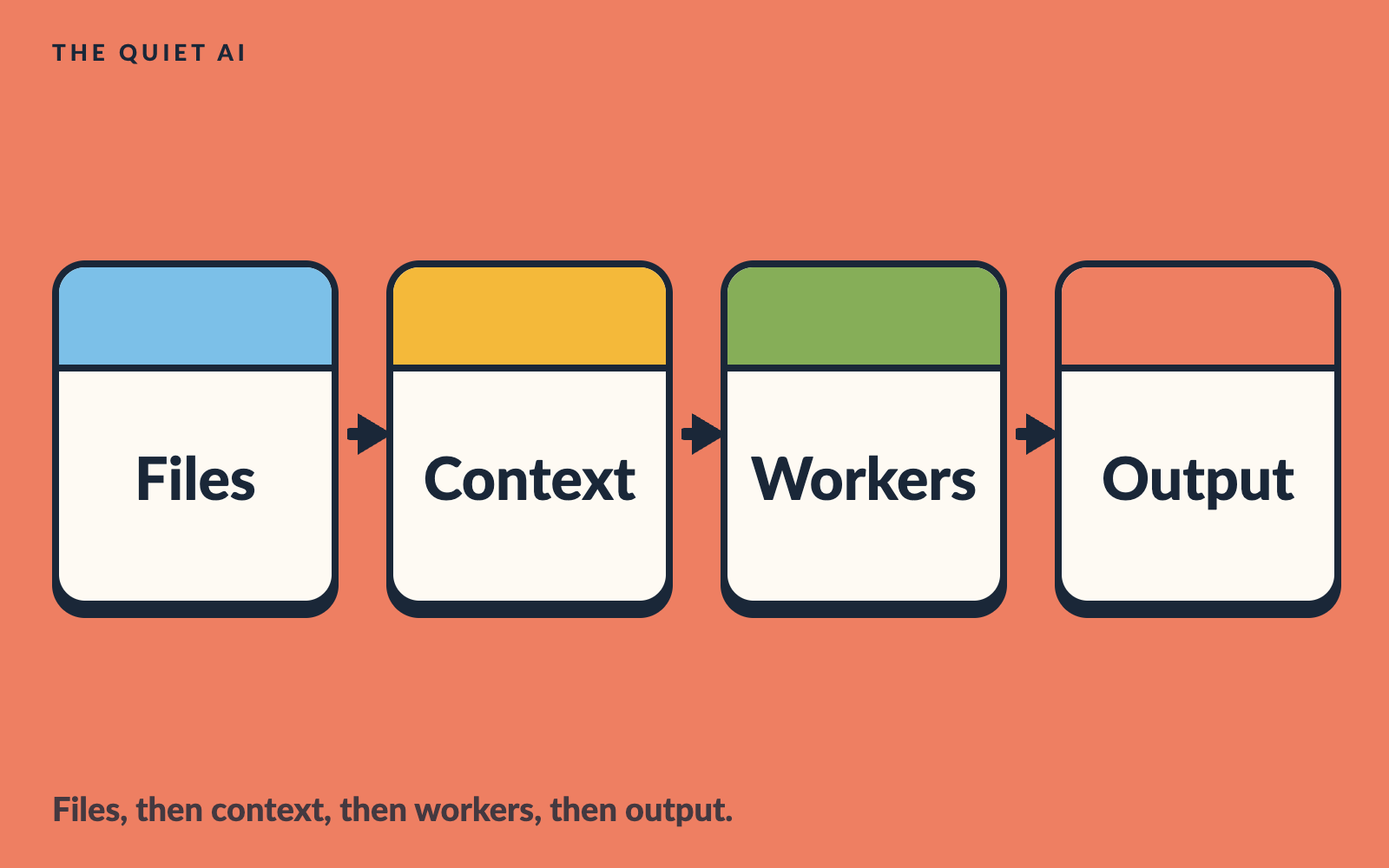
That’s a structural claim, not a numeric one: files, then context, then workers, then output. I can’t tell you how many outputs a folder like that produces. It produces more than any single pass through it could.
What to try on Monday
If you keep a second brain, skip the question of what else to capture. Ask what could work in that folder if you let it in.
Pick one folder you already keep current. Write down, in plain sentences inside it, what counts as finished and what has already been decided. Then hand it to one kind of work that isn’t you and see whether it can start without a briefing.
If it can’t, the folder is still a library, and now you know where.
Maybe your second brain doesn’t need to remember more. Maybe it needs coworkers.