
The House That Learned to Run Itself
Every time someone said “we checked, it’s all fixed,” something nobody had checked yet was already going wrong underneath it — and the honest thing, each time, was to say that part out loud too, instead of quietly patching it and moving on.

Imagine a house that learns how to take care of itself.
Not clean itself, exactly. Just — keep its own promises. Every day, at the times it said it would, it puts something out into the world: a letter, a little film, a picture with words on it. And it does this whether anyone is home or not. Whether the lights are on or off. Whether everyone in the house is asleep, or out, or the whole place is dark and quiet and nobody has touched a single switch in hours.
That’s a nice idea. But it raises a question a five-year-old can feel even before they can say it out loud: how do you know a promise is being kept, if nobody is standing there watching it happen?
You can’t just believe it. Believing it is easy and free and doesn’t cost anyone anything, which is exactly why it isn’t enough. The only honest answer is: you check. And then — this is the part that actually matters — you keep checking, because the first time you check, you might be checking the wrong thing without knowing it. This is the story of one house, and one week, where that happened four separate times in a row.
A Helper Who Lives in a Cloud

The house got a helper. Not a person — more like a very reliable pen pal who lives up in a cloud, far away, who never gets tired and never needs the house’s own lights on to keep working. The helper’s whole job was simple: look at the calendar, see what’s due, send it out. A film at six. A little picture-with-words at nine. Whatever the plan said, whenever it said it.
The helper moved in — got built, got tested, got switched on for real — over the first part of that week. And once it was switched on, the house didn’t need anyone staying up anymore. That was the whole point. A person could close the laptop, or close their eyes, or get on a plane, and the letters would still go out.
That’s a lovely thing to build. It is not, by itself, a thing you get to trust yet. You get to test it. So they did.
The First Real Test
A few days in, someone looked closely for the first time at what had actually happened while nobody was watching — not just whether the helper had crashed, but whether everything that was supposed to go out had actually gone out.
Some of it hadn’t.
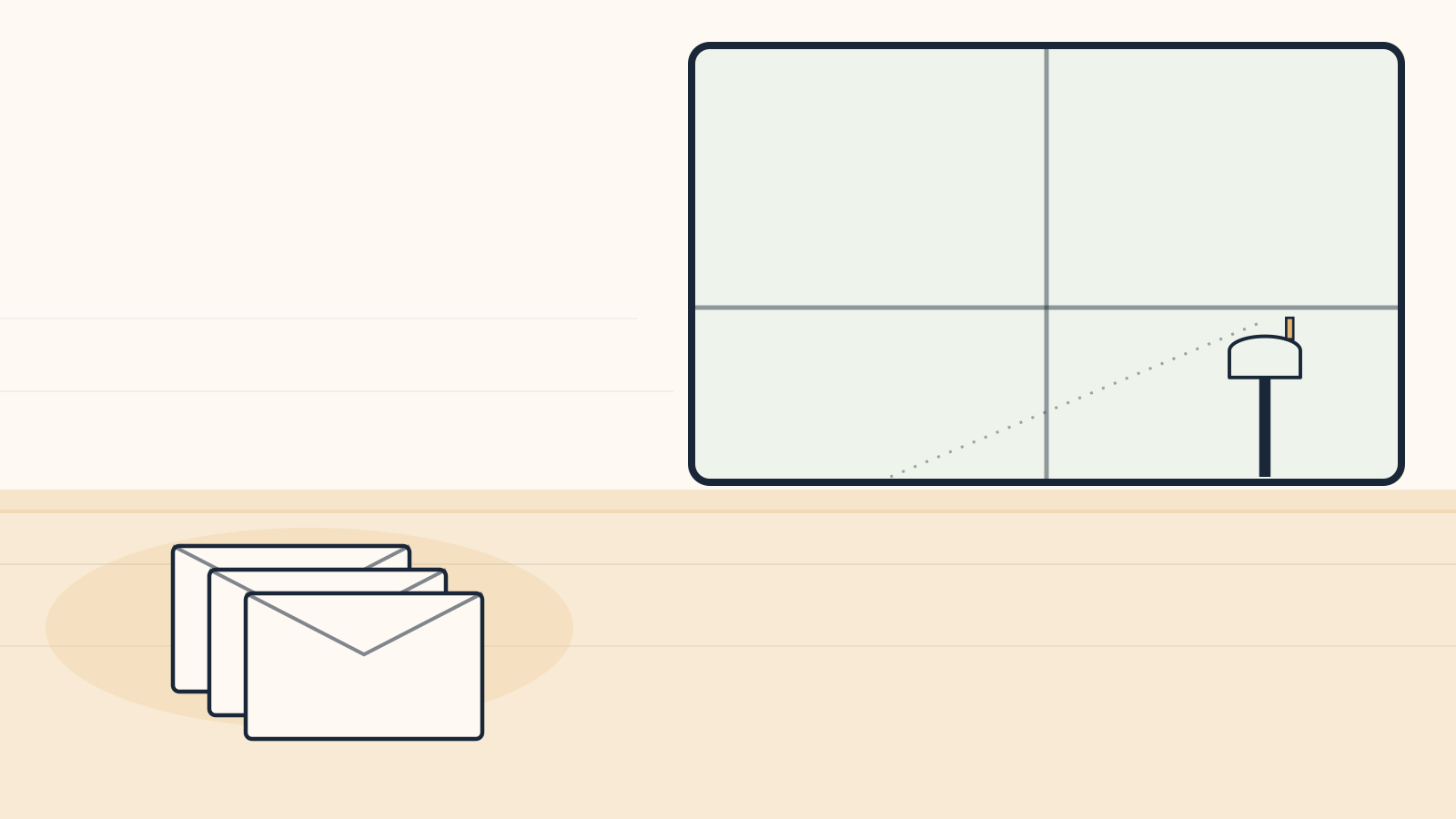
Here’s what was happening: the family would sit at the kitchen table and write their letters — the actual words, the actual pictures — right there at home. But writing a letter isn’t the same as mailing it. Somebody still has to carry it out to the mailbox. And nobody had ever taught the house to do that part by itself. So the letters sat on the kitchen table, finished, ready, and the helper up in the cloud never even knew they existed. It wasn’t broken. It was just never told.
They fixed it the same day: they taught the house to walk letters out to the mailbox on its own, every few minutes, without being asked. Simple. Solved.
Except — and this is where the real story starts — the person in charge made a rule right then that turned out to matter more than the fix itself: finding one missing step and fixing it is not the same as knowing there isn’t a second one. So instead of calling it done, they kept watching for another day.
That’s the first shape of the real answer to the five-year-old’s question. Not “we checked, so now we know.” More like: “we checked, found something, fixed it, and the honest next move is to check again — because finding one thing doesn’t prove there’s only one thing.”
Two Things Nobody Noticed

The next day, the news was good, mostly. The helper itself had been running clean the whole time — nothing crashed, nothing skipped, over and over, for two straight days. That part had earned some trust.
But looking harder turned up two things that had been happening quietly underneath the good news.
The first was about the diary. Both the family and the cloud helper write in the very same shared diary. It’s how they leave each other notes about what happened. Most days that’s fine. But if the helper writes on a page at the very same second someone at home also writes on that page, the two sets of handwriting can land right on top of each other in a way that jams the page. Nobody had cleaned it up. And that jam did real damage, not just a messy page: it quietly blocked the “carry the letters to the mailbox” job too, since that job had to write in the diary as part of doing its work. One jammed page, and a whole chore stopped happening, silently.
The second thing had nothing to do with the diary at all, which is exactly why it had gone unnoticed for so long. There was a little machine whose only job was to tape a proper photograph onto certain letters before they went out — a nice one, drawn on purpose for that letter. It turned out that machine had never once actually done its job, not since the very day it was built. Every single time, it quietly skipped the taping step, and a random, blurry, in-between picture went out instead. Nobody had caught it, because the letters still went out. They just went out wearing the wrong face.
Both were fixed the same day they were found. The diary jam got cleaned up. The taping machine got fixed so it would actually tape the photo from then on.
But here’s the part with no clean fix: several of those wrong-faced letters had already been delivered. Once a letter’s out in the world, you can’t call it back and quietly swap the photo — there’s no undo button for something that’s already arrived at someone’s door. So someone had to go, in person, letter by letter, and fix each one by hand where it had landed. Six of them. One at a time. That’s not a machine’s job. A person did it, because a person was the only one who could.
It Jammed Again
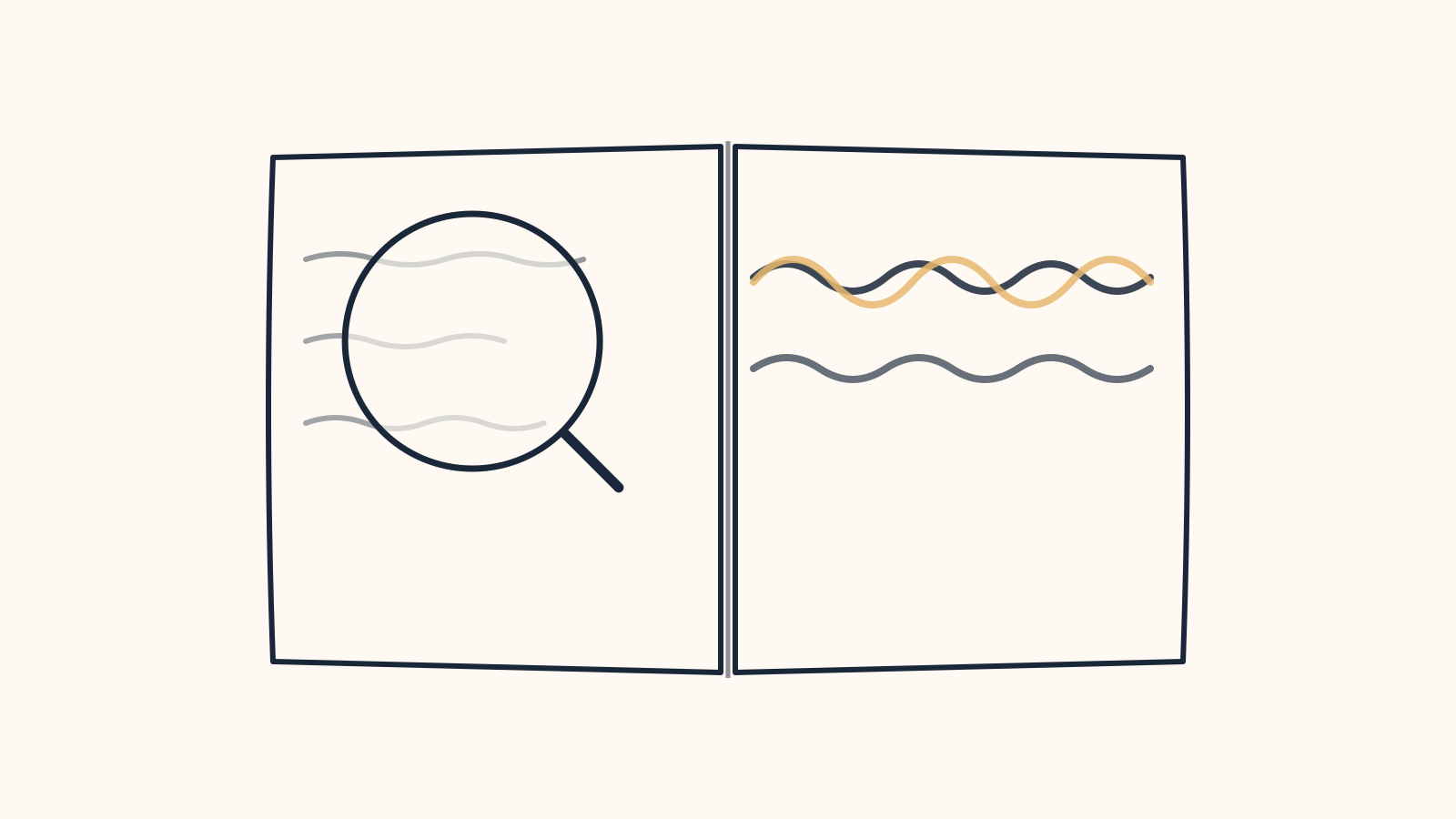
The very next morning, the same kind of thing happened again. The shared diary jammed — same page, a different specific reason this time, not two people writing at once, but a different kind of interruption with the same result. And it sat jammed, quietly, for a whole day, before anyone noticed.
Why did it take a whole day? Because the morning check-up — the part of the house whose only job is to open the diary each morning and say “yep, normal day” or “hey, something’s off” — had never actually been taught to look for this specific kind of wrong. It was watching for other kinds of trouble. A jammed diary just wasn’t on its list. So it looked at a jammed page and, having no reason to flag it, said nothing was wrong.
That’s worth sitting with for a second, because it’s the same question from the start of the story, wearing a different coat: a check that isn’t looking for the right thing will tell you everything’s fine, and it won’t be lying. It just won’t be looking.
“We Checked Everything. Really, This Time.”
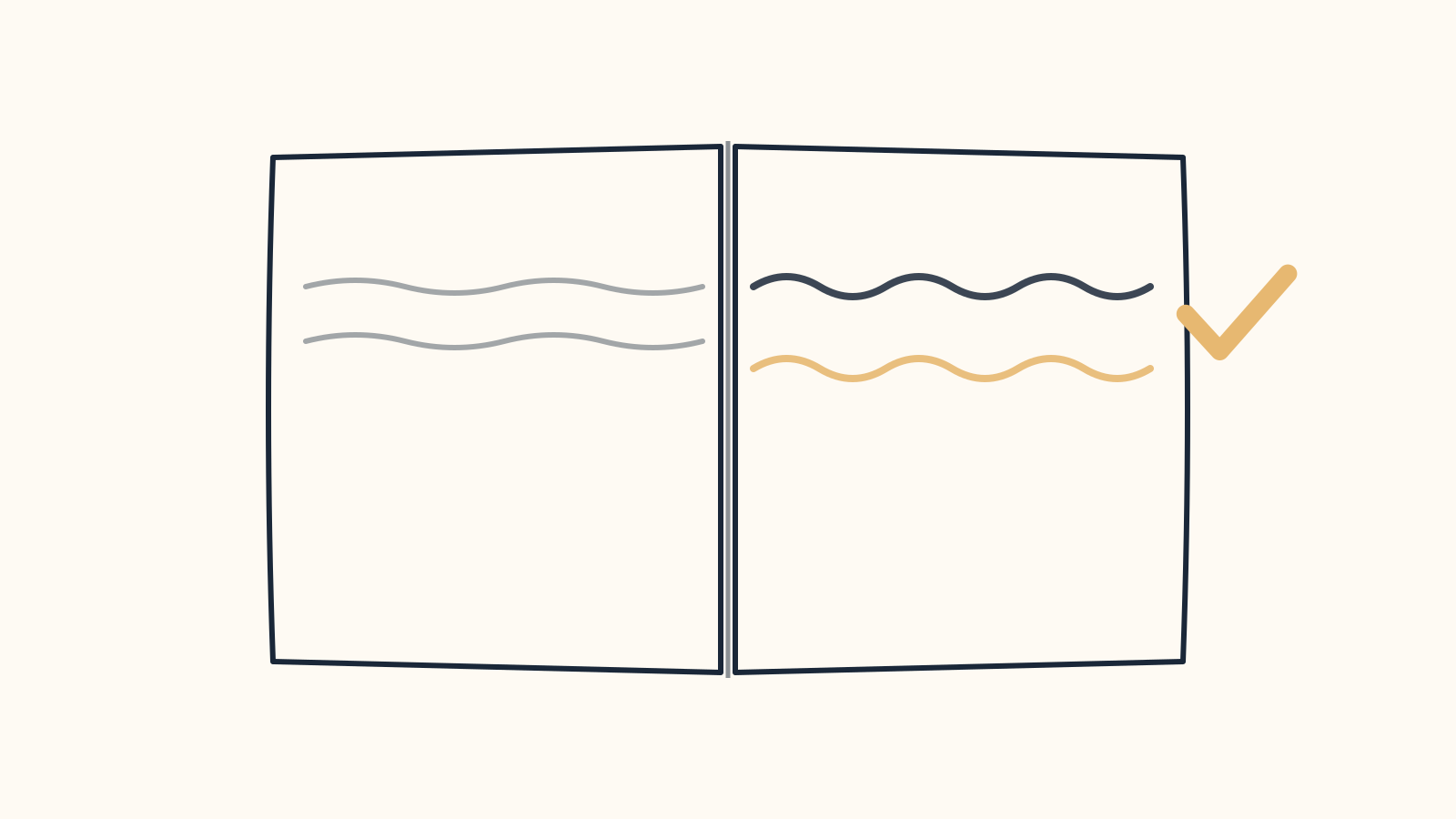
They found it and fixed it that same day. And this time, instead of just cleaning the jam up again, they did something better: they taught the diary itself a rule. From now on, if two people write on the same page at the same time, the diary doesn’t treat it as a fight and jam. It just keeps both people’s handwriting, one line under the other. That kind of jam literally can’t happen anymore — not “we’ll catch it faster,” but “it can’t occur.” They also taught the morning check-up to specifically look for a jammed diary from now on, in case some other version of the same problem ever showed up again.
And then they wrote it down, in writing, plainly: no more known problems.
If this were a bedtime story, this is where it would end. A helper who works while you sleep, a diary that can’t jam anymore, a morning check-up that knows what to look for. Everyone home safe. The end.
It wasn’t the end.
Thirty Minutes Later

About half an hour after that clean, confident sentence got written down, it turned out to be wrong. And not in a small way.
Here’s the part of the story nobody had been looking at, because it lived somewhere completely different from the helper, the diary, or the mailbox. Outside the house, on a post by the door, there’s a little bell on a timer. Every fifteen minutes, it rings, and its whole job is to remind the cloud helper: “go check if anything’s due right now.” Small job. Should be boring.
The bell’s key — the thing it uses to knock and get the door open when it goes to remind the helper — had quietly gone bad, more than a day earlier. Nobody did anything to cause it. Keys just go bad sometimes.
And here is the strange, important part: the bell kept ringing. Right on time. Every fifteen minutes, exactly as it was supposed to, the whole day and night through. If you’d only listened for the bell, you would have said everything was perfectly fine. But every single time it rang and knocked, the door didn’t open — and the bell never once said so. It had never been taught to notice whether its knock actually landed. It just assumed that ringing on schedule was the job, finished, done, nothing more to check.
So real letters — real ones, already written, already due — simply didn’t go out that morning. Three of them. And the only reason anyone found out was that a person went and looked directly at where the letters were supposed to have arrived, and saw they hadn’t — not by reading a log that said everything was fine, because the log said exactly that, the whole time.
They fixed what they could fix that same day: they taught the bell to notice, from now on, whether its knock actually worked — and if it doesn’t, to ring loud enough that a person hears it, instead of quietly assuming its job is done just because the sun came up on time. That part is real and it matters. The next time a key goes bad, somebody will know by the next morning instead of a day and a half.
But the actual key — the one that’s bad right now — still needs a person to walk over and put a new one in. Nobody can fix that from inside the house. And until someone does, here is the honest truth, true at the exact moment this is being written down: the helper cannot let itself in. Nothing goes out by itself right now. Not because it forgot how. Because the one small thing standing between “ready” and “sent” is a key only a person’s hand can replace.
What the Bell Cannot Tell You

So: does the house run itself?
Some days, mostly. Some days, not quite, and nobody found out until they looked with their own eyes instead of trusting the good news the diary was quietly, honestly reporting. That’s not a failure of the house. It’s what checking on something you can’t watch every second actually looks like, every time, for real: you find something, you fix it, you say so plainly, and then — because saying “fixed” is not the same as saying “checked the fixing” — you keep looking, and sometimes what you find next is that your last fix had a gap in it too.
That’s the part a five-year-old can feel without needing the word for it. It isn’t really a story about a helper, or a diary, or a bell. It’s about the difference between something that looks like it’s working and something that actually is — and about how the only way anyone has ever told those two things apart is the plain, unglamorous, never-quite-finished work of checking again, and saying out loud when the last check missed something.
The bell is fixed enough to shout next time. The key is still bad. Nobody has pretended otherwise, and nobody’s going to, just to end the story on a nicer note than the true one.