What Yoga Did for the Body, AI Can Do for Thinking
But only if we meet it the way the West eventually learned to meet the mat: as a practice, not a product.
This month a machine helped a mathematician crack a question that had stood open since 1939. A few years ago, a chess engine quietly became stronger than any human who has ever lived. The headlines call these breakthroughs in machine thinking. I think that’s the wrong word, and the wrong word is costing us the actual lesson.
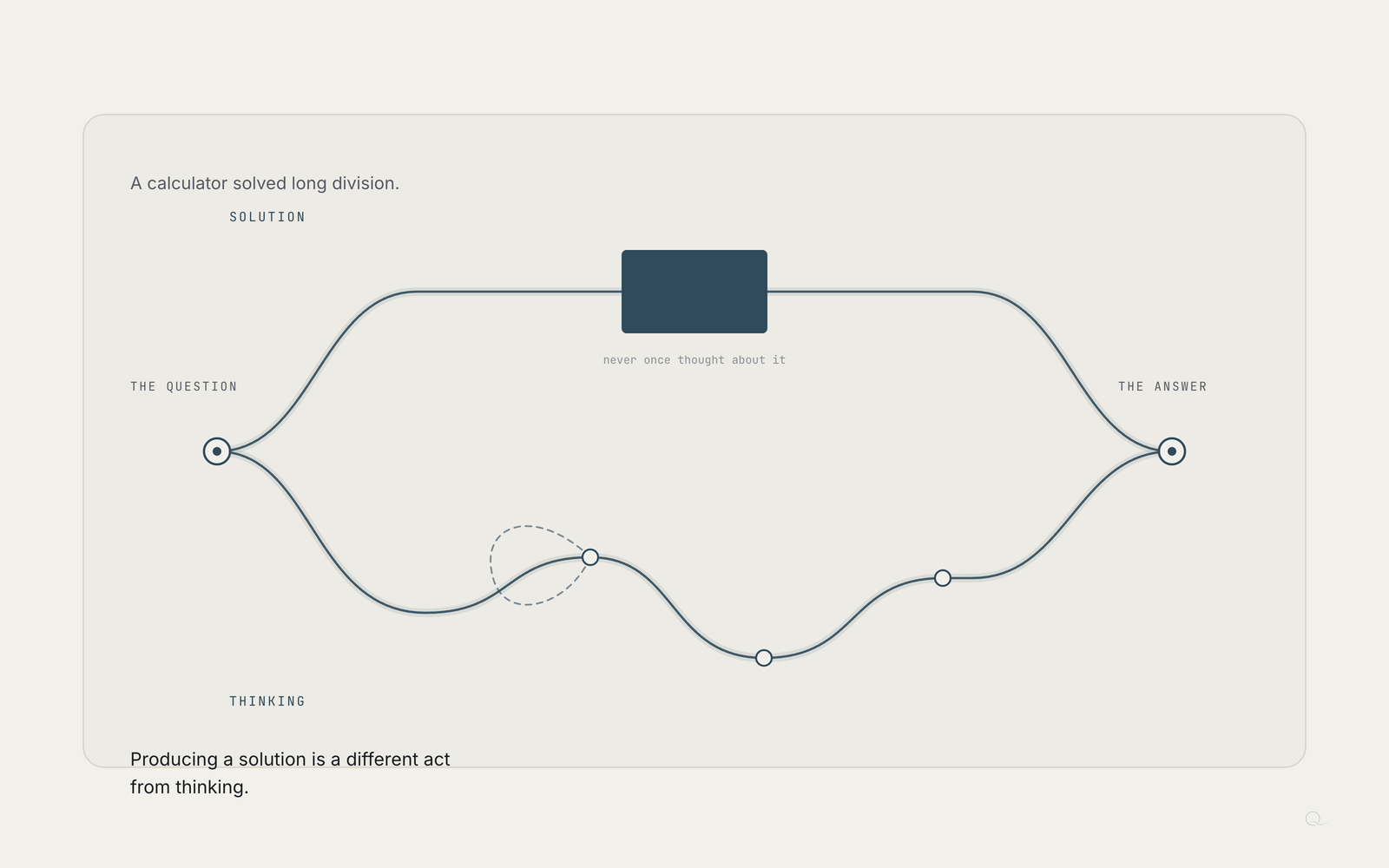
A calculator solved long division. It never once thought about it. What the mathematician and the chess engine produced were solutions, and producing a solution is a different act from thinking. If we stop at “the machines are getting smart,” we arrive at the familiar, tired argument that humans are becoming optional. That story is loud and shallow, and it misses what is really happening in the room.
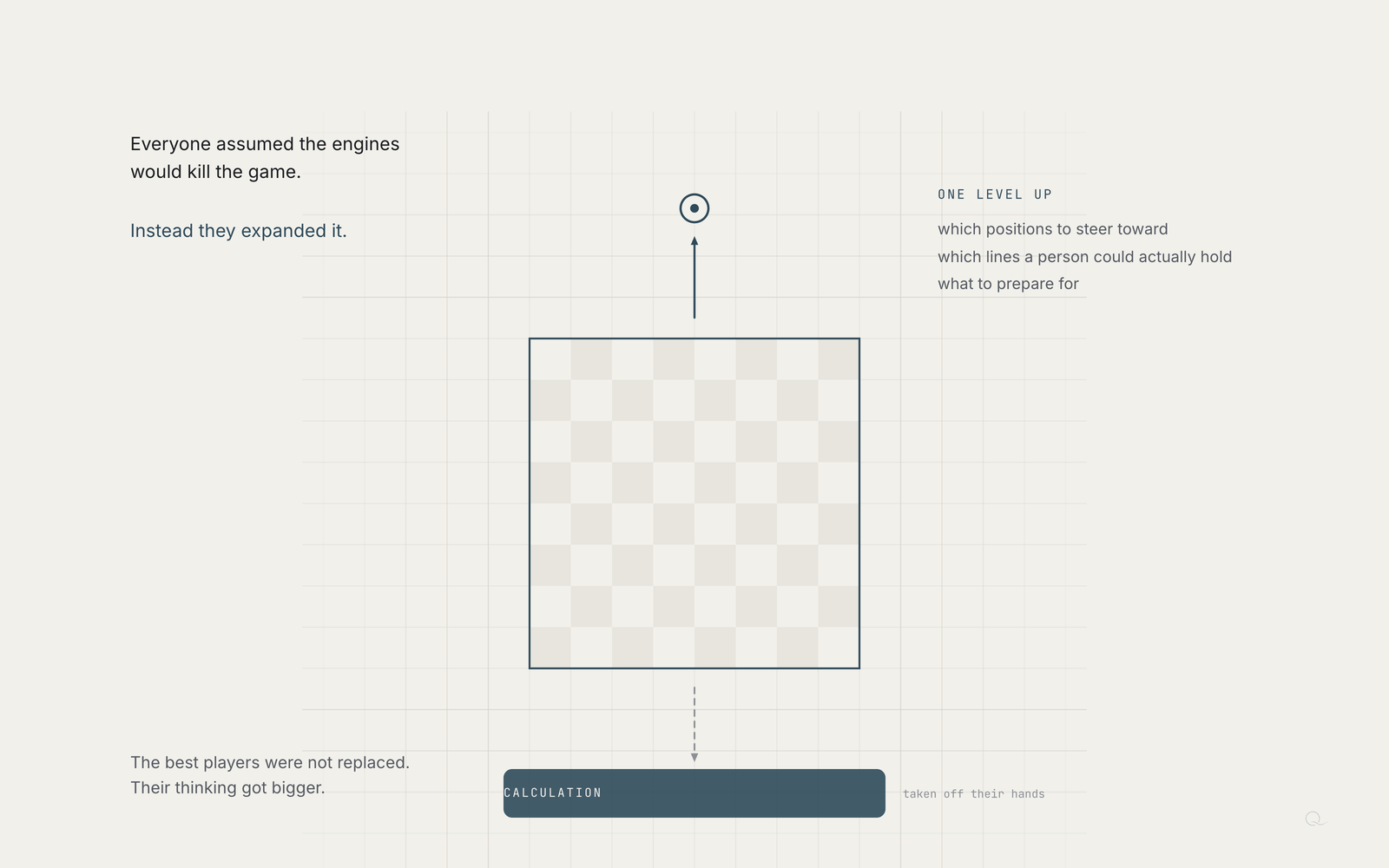
Look at what actually happened to chess. Everyone assumed the engines would kill the game. Instead they expanded it. Players began studying moves no human would ever have trusted, ugly-looking moves that turned out to be correct, and their own feel for the board grew because of it. The engine didn’t do the thinking for them. It took the calculation off their hands and freed them to work one level up: which positions to steer toward, which lines a person could actually hold, what to prepare for. The best players weren’t replaced. They were handed a new instrument, and their thinking got bigger.
I’ve watched this exact shape before, nowhere near a chessboard. I’ve spent most of my life teaching yoga.
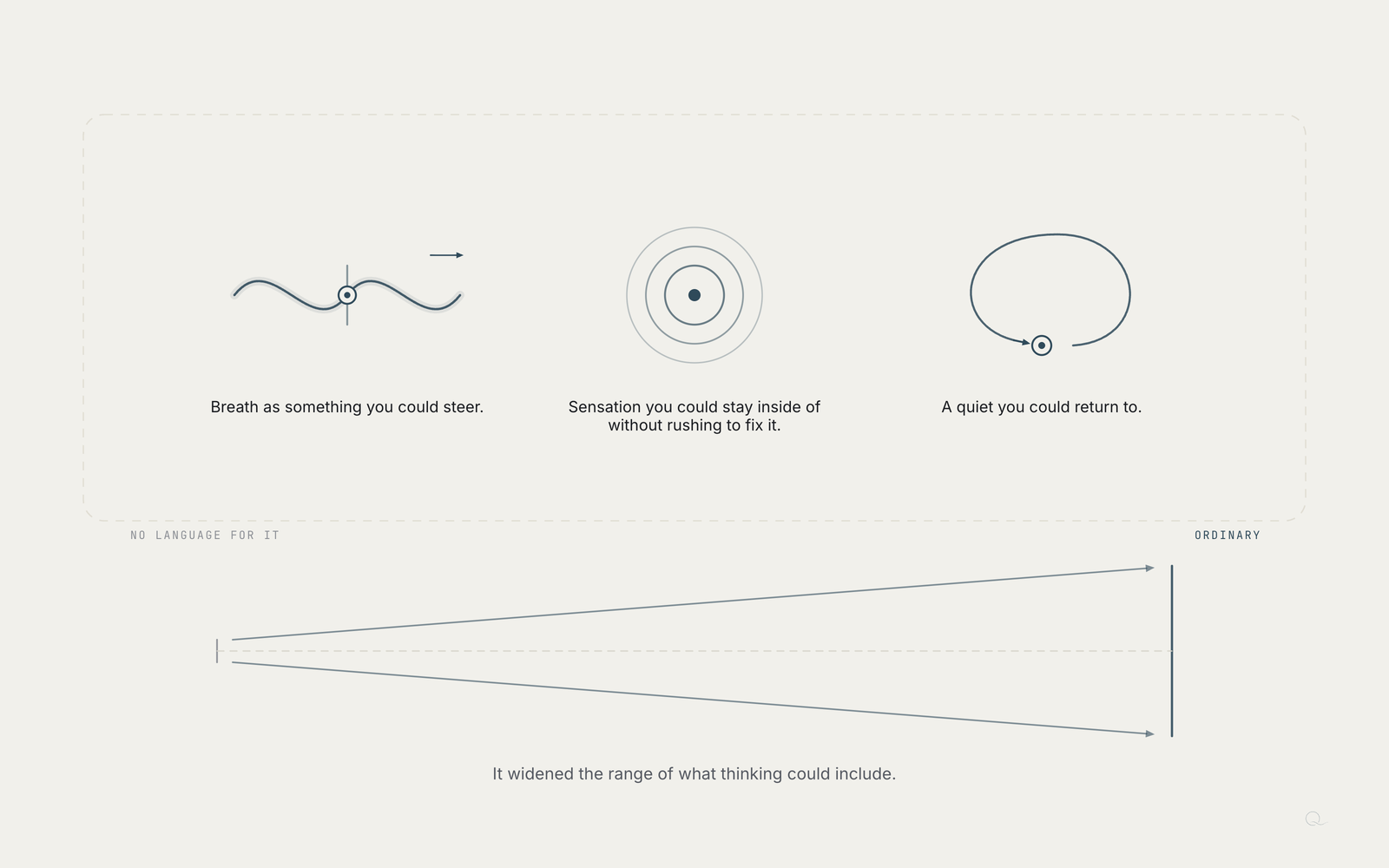
Fifty years ago, yoga arrived in the West looking strange and foreign. It got sold as exercise, a way to touch your toes. But what it actually offered was access to a way of paying attention that most people here had no language for. Breath as something you could steer. Sensation you could stay inside of without rushing to fix it. A quiet you could return to. Today that vocabulary is ordinary. “Mindful” shows up in corporate memos. Doctors recommend breathing before medication. Something once unknown became part of daily life, and along the way it didn’t replace how the culture thought. It widened the range of what thinking could include.
Now the honest part, because it’s the part that matters most for AI. The same wave that carried the practice also flattened it. Yoga became a look, a market, a competition of shapes. Millions took the pose and quietly left the practice behind. Both things are true at the same time. Yoga expanded a culture’s inner life, and it got sold back to that culture as a product that asks nothing of you.
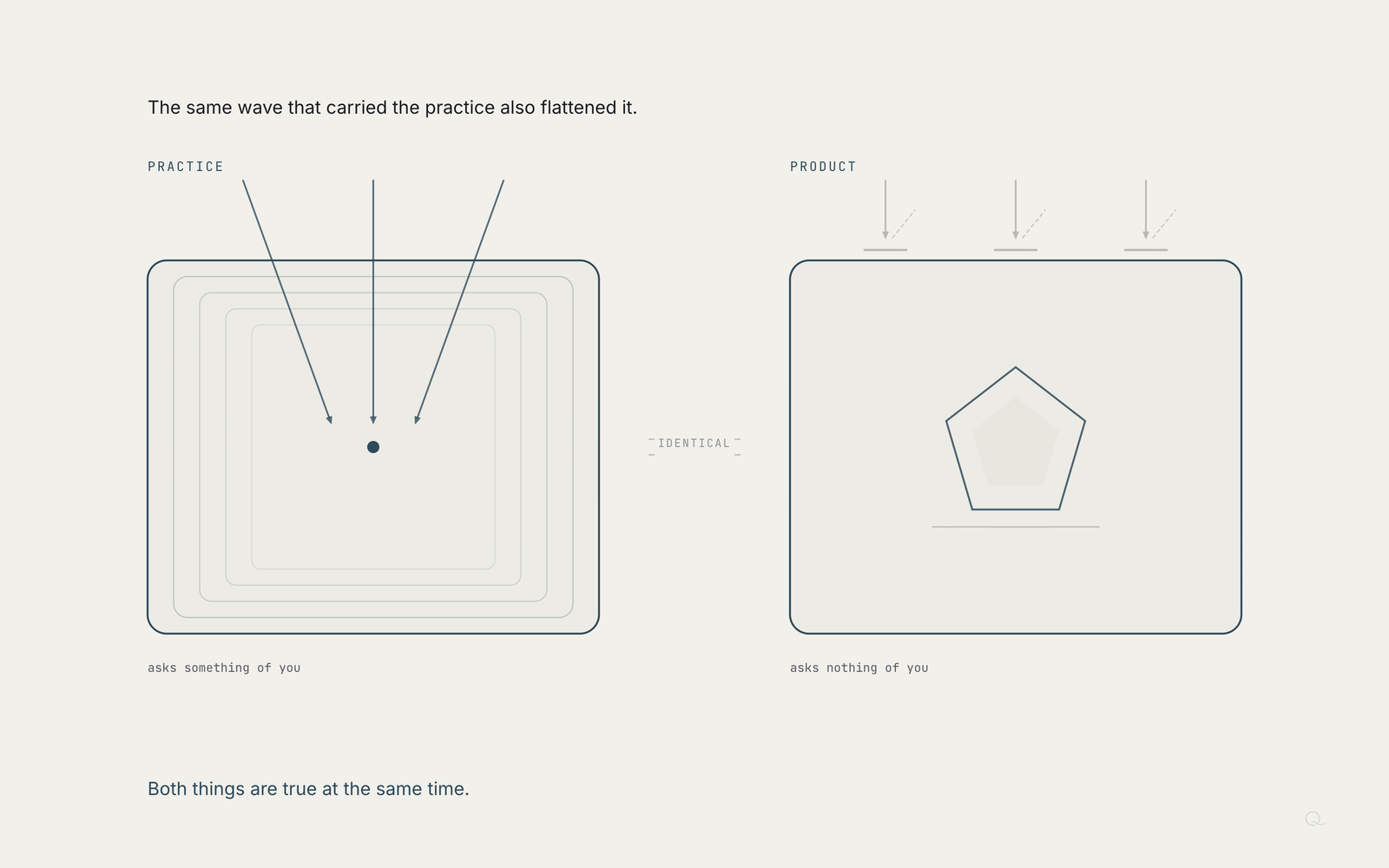
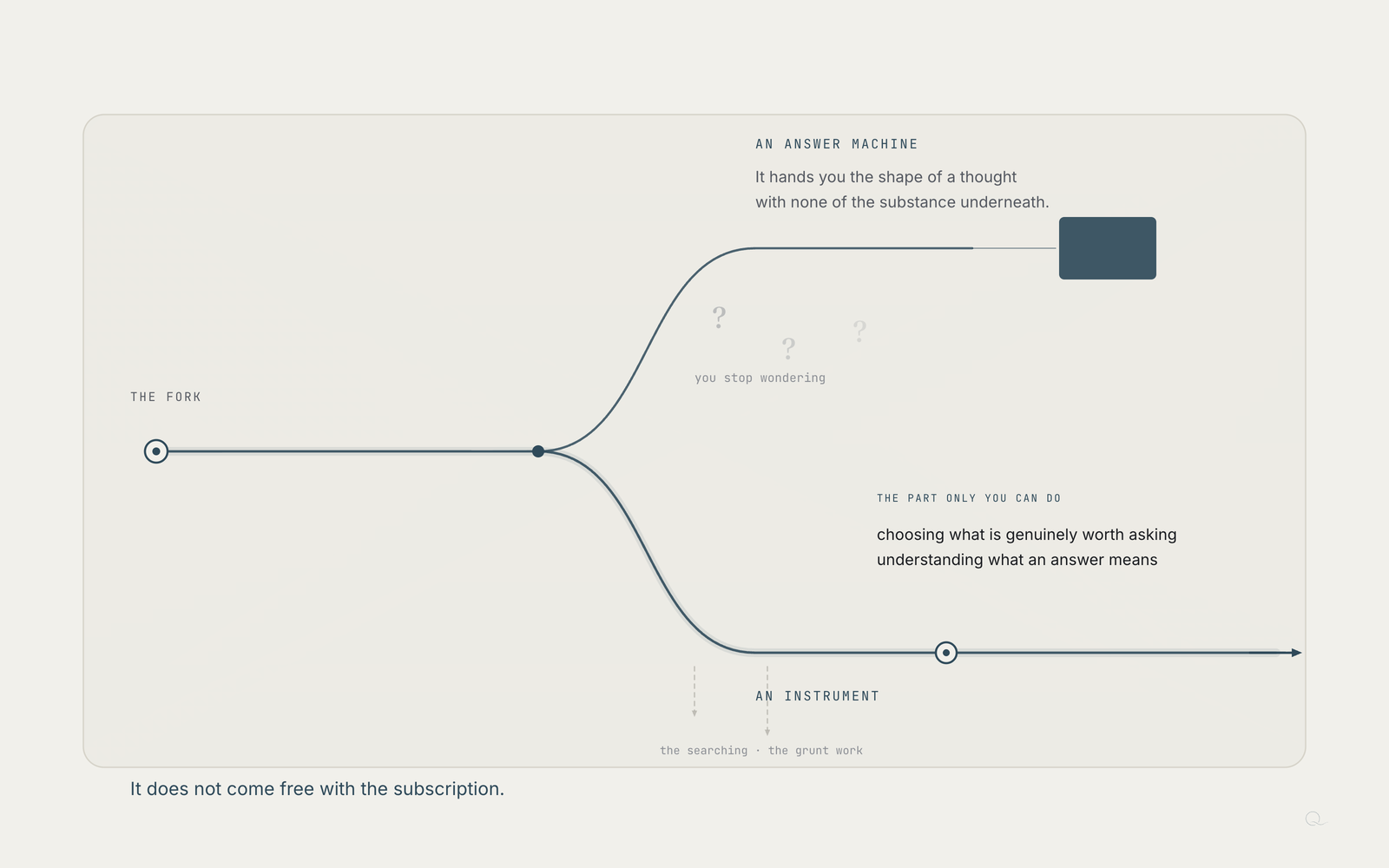
AI is standing at precisely that fork right now.
Used one way, it’s an answer machine. You stop wondering. It hands you the shape of a thought with none of the substance underneath, the how with none of the why, and over time you get a little less able to hold your own questions. Used another way, it takes the searching and the grunt work off your hands and gives you back the part only you can do: choosing what is genuinely worth asking, and understanding what an answer means once it arrives. That second way is a real expansion of how you think. And like any expansion worth having, it’s a practice. It does not come free with the subscription.
Which is why I don’t think the people who benefit most this decade will be the ones with the best tools. Tools are getting cheap and evenly spread. It will be the ones who learn a new way of paying attention to their own questions, who treat this technology the way a serious student treats the mat rather than the way a shopper treats the leggings.
That’s the work I do now. At The Quiet Ai, I help people and teams meet this moment as a practice instead of a gadget, so they use it with actual judgment and come out thinking more clearly than they did before, not less. Less hype, more attention. The point was never the machine.
The mat never made anyone flexible. It made a place to practice, and the practice did the rest. AI is the same kind of invitation. What it expands in you depends entirely on how you decide to show up to it.